Our weaknesses define us. In my experience, I was taught to feel ashamed of my weaknesses and limitations by the immense social pressure to at least appear to be perfect. The United States is a pretentious nation; our culture is based on living up to the presentation of perfection. We’re often haunted by the nightmare of the “American Dream.” So, it can be extremely difficult to balk against the system, to rail against the status quo. However, recognizing and admitting to our weaknesses is the only true way to gain real strength because our limitations let us know where we need to rely upon the strengths of others. According to my faith, we’re supposed to lean on one another, bear each other’s’ burdens, pour our love over one another to cover a multitude of inadequacies. Human beings are like Swiss cheese. We all have a variety of holes. When we layer Swiss cheese on a sandwich, the holes don’t align. Every slice has its unique pattern. Adding another slice covers the holes of the prior one. In the same way, knowing our weaknesses teaches us, not where we need to improve, but where we need the strengths of another person to cover our holes. Once we’re willing to define ourselves by our holes, by our unique pattern of weaknesses, instead of feeling shame for having weaknesses, then we’re able to focus on using our strengths to cover the weaknesses of others and on surrounding ourselves with other people whose strengths are able to compensate for our limitations.
Author: ChristiePanter
Deconstruction
My life is not going to be all sunshine and rainbows just because I decide to trust a Higher Power. My past has been a raging shitstorm because I was built with faulty wiring. I need an electrician to rip all of the old crap our and replace it with new circuitry because I obviously don’t know what the heck I’m doing. I’m tired of bumbling around in the dark because my power source is cut off from my light source by kinks and fraying. I’m tired of getting burned by exposed wires that lack adequate sheathing for protection. I have to allow my walls to be broken down for all of the hazardous materials to get dug out, which leaves me feeling vulnerable and exposed. But I have to risk this phase of the deconstruction process or nothing is ever going to change.
AAA to the Rescue
I once heard that depression was anger turned inward. After a decade of working through my own depression, I’ve discovered that both depression and anxiety are caused by unprocessed emotions. In a society where we’re encouraged to numb our feelings instead of feeling them, depression and anxiety are ubiquitous issues. Men are often taught that it’s not okay to show emotions, especially sadness and fear. They are told to toughen up, to take it like a man, to suffer in silence. Women are also expected to repress their feelings. When we don’t, we’re called hysterical, crazy, and emotionally unstable. There’s so much pressure on everyone to be happy, successful, and “put together” that we ignore the messages of our emotions to our own peril. Well, today I’m here to give you permission to feel your feelings and to express them. If you’ve been wronged, you have the right to get angry. Stand up for yourself. Speak up for yourself. If someone else doesn’t like it, that’s their problem. Don’t let your anger sit inside of you eating away at you from the inside out. Ask yourself if there is anything constructive you can do to right the situation. If there’s nothing positive you can do, give yourself ten minutes to feel and express your anger. Move your body to release the excess energy. Scream. Do whatever works best for you. I give myself time to cry. I can’t change the past, but I can visualize my tears washing away the pain. My tears were unproductive earlier in my life because I didn’t know what I was crying about. Expressing emotions requires Awareness of how you feel and why you feel that way, Admitting to yourself and to the universe how and why you feel wronged, and Acknowledge that you’re hurt because you believe that you deserve better (or that you can do better if you’re upset with yourself). In this way, our emotions become our servants rather than our tormenters.
Double-edged Sword
Depression is not a character defect. Depression is not your fault. Depression is a default mode of the brain that is meant to protect us from sustaining further harm. Depression is a huge red flag indicating that something is terribly wrong. Depression is how our body communicates to us that we need help. It’s a warning sign that we have ventured precariously close to utter annihilation and that if we don’t intervene now, we could die. Human beings are social creatures. We need to form meaningful connections with other people for survival. Contrary to common opinion, we don’t need community just to pool our resources to ensure we stay fed and safe. It’s more fundamental than that. Our brains are literally wired for human connection. In extreme cases, other mammals are able to substitute for human contact, but, for the most part, without other human interaction, we die. This need is a double-edged sword. The greatest harms we sustain to our psyches as humans are often caused by our interactions with other humans. Our greatest fears are caused by our need to maintain relationship; our deepest shame, our most intense regrets, our darkest disturbances emerge from our primary, foundational relationships. And these pains, the agonies we sustain within our relationships, can only be healed within relationships.
Lost
Shortly after my parents’ divorce, my mother took us to see a family counselor. I don’t remember if my younger sister was with us at the time. She was only one. My older sisters were ten and twelve, and I was eight. This one session we attended has stuck with me my entire life. It’s where I was first introduced to the concept of family roles: the scapegoat, the hero, the lost child, and the mascot. That’s the order in which I remember them and the order in which my sisters and I fell headlong into them. These dysfunctional family dynamics are so predictable and so prevalent, they’re spelled out in psychology textbooks with little cartoon figurines and everything. Damn it! I hate getting lost. I hate feeling lost. I hate feeling as though I’m treading water, kicking and paddling and never getting anywhere. I’d never felt lost before this as a child. I was the one who wandered off chasing whatever caught my eye. I was confident and adventurous. My mother had to hunt me down. It was never the other way around. But when my father left, he took my inner compass with him. My home was gone, and it was never going to come back again, ever. My entire reason for being vanished, and I disappeared into the shadows of an unfriendly, uncaring world.
Appreciation
Whenever I notice myself feeling grumpy, I ask myself what I have to be grateful for. Usually, my response begins as a litany of excuses for how grumpy I feel. I didn’t sleep well last night. I’m so tired of drifting around the country with nowhere to call home. I feel so tragically unsettled and displaced. But, at least I have a motorhome to sleep in. I’m not sleeping in an economy sedan this time or under a bridge. I have enough money to pay for gas to drive back out to see my daughters and my granddaughter again. There are plans in the works for me to move to a new, undisclosed location to begin my life over again, for the millionth time, but this time with a decade of recovery and healing from my past abuse. I’m no longer doomed to repeat the patterns of my past pain. I’m finally free. And, there are beautiful wildflowers growing alongside the interstate. There’s an occasional bird flying past. There are mountains and trees, lakes and rivers, and all kinds of other natural beauty for me to enjoy along the journey. I just need to be willing to observe and appreciate them as they pass.
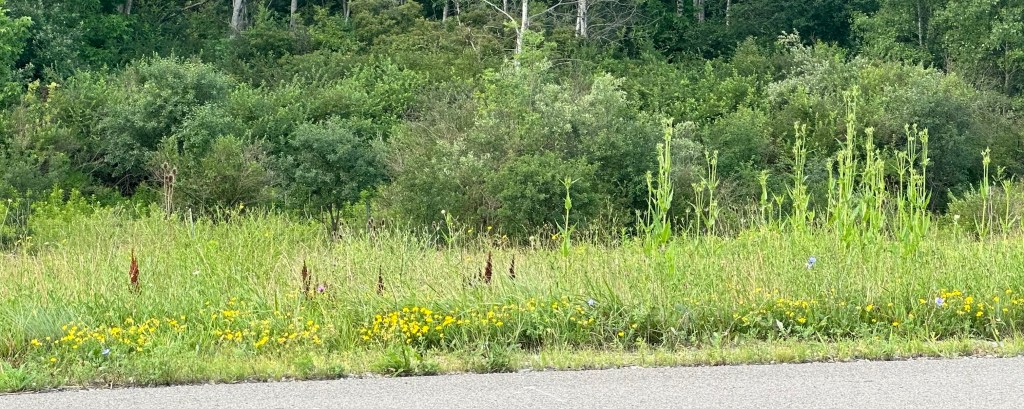
Evidenced
I lived in the realm of self-reliance. Everything was up to me, and I couldn’t do anything right, or even good enough. So, all I could do was give up and helplessly accept whatever fate dealt me. I tried to do better. I tried to be better. I tried so hard my trier broke. I gave up. I just couldn’t do it. What I didn’t realize at the time was the difference between giving up because life was going to be a mess regardless of my efforts and giving up because I was trusting life to be good without my constant striving. The former was all I knew, all I had ever experienced. The latter, I learned was possible as I began intentionally changing my engrained beliefs and perpetual perceptions. My early years were filled with rejection, humiliation, and abandonment, so those were programmed into my brain as far as what to expect in life. Once I became aware of what my expectations were, it became my responsibility to change them. I didn’t want to continue to only expect to receive pain. I wanted to learn how to expect to receive love, care, and support from others. It’s still a struggle, but I am learning. I am healing. I am beginning to expect a better outcome in my life despite all of the evidence to the contrary.
Rewiring
Over a decade ago, I wrote a song with the ending chorus: “And I can feel it, Your hand on my hair, and I hear Your voice say, ‘I’m already there.’ I don’t need to worry. You have it under control, And You take good care of me. You’re so wonderful. I’m Your sweet, precious child, whom You’ve already reconciled. You made me new. You made me whole. I’m already there, already there. I’m good enough.” Only it didn’t end with “good enough” originally. It wasn’t even within the realm of my conception to think I could ever be good enough for anything. The line was amended a few years into recovery, several years after the song was written. I floundered for decades in depression and despair because I was “the lost child” in my family. I didn’t suffer from unthinkable abuses or parental alcoholism. I had a melancholic disposition with a huge dose of naiveite. I felt ignored, overlooked, and unwanted. My inner brokenness warped my brain, literally (I have the scans to prove it), and skewed my perception in ways that only allowed me to experience rejection, humiliation, and shame in relation to other people. Armed with the knowledge that I can change my perception and thereby alter my reality, I’ve set forth on a mission to rewire my neurological connections. I often wish it could be as simple as popping in a pair of corrective lenses; it is simple, but it’s not easy.
Being Me
Some days I struggle to get out of bed. I lose the battles I’m fighting in my head. I can’t even manage to put my feet on the floor. Let alone clean and dress and get myself out the door. Sometimes my trials are too big for me, and all I can manage is going back to sleep. Some days I flat out refuse to behave. I know my grandmother is rolling over in her grave. But I just can’t stand down or straighten my act. I walk a crooked line as a matter of fact. Sometimes my crawling leaves me far behind, but I never promised and adequate finish time. I may not be able to always be good. I may not stand tall the way that I should. I may not live up to what you want me to be, but I am always capable of being me. Well, I’m not successful in the eyes of my peers. I often wish I could vanish, just disappear. I get so tired of failing. I just want to go home. My one reprieve is knowing I’m not alone.
Powerless?
I’m powerless over the decisions of other people, and I’m powerless over the shit that happens in life. I can’t prevent natural disasters. I can’t stop political mayhem. And, I don’t have any power over accidents or acts of fate. What I do have power over, however, is how I choose to perceive what happens, how I choose to respond to what happens, how much I choose to focus on any particular input, and what I choose to think about. Trying to exert control over anything or anyone else will not make me, or them, safe. In humility I find liberation and strength. As long as I rely on myself: self-confidence, self-knowledge, self-will; I am doomed to failure, and I can continue falling indefinitely. Hitting bottom is not guaranteed. There is always farther to fall. My bottom hit me when I saw my addiction in someone else’s story. Therefore, I tell my story in hopes that reading it will help your bottom hit you. We’re all powerless over the cards we were dealt, what family members sat at our table, and the rules of engagement we were originally taught to play by; but we are not powerless now. If we are willing to admit defeat, to leave the table, to walk away from everything we think we know about who we are and what we want, then we find the ability to start over. We can bury the ashes of the past and build a new life on the foundation of truth, hope, and love.
 Worthy of Love and Belonging